Massenet's Cendrillon
Music by Jules Massenet
Libretto by Henri Caïn
Based on fairy tale Cendrillon by Charles Perrault
Chicago City Opera, February 2026
This was a special show. I had seen Rossini's La Cenerentola, but when Alexis approached me about directing this piece, I had no knowledge of it. The opera is luxurious and indulgent, a series of beautiful arias and duets acting as set pieces, linking some more comic scenes together. Most notably, it strayed quite a bit from what I was expecting to see in a Cinderella story.
Lucette (Cinderella) has a father, Pandolfe, who plays a major role throughout the show. No place in the text explicitly calls for anyone to try on the missing shoe - the prince just recognizes Lucette when he sees her. There's no direct antagonism between the stepfamily and Lucette, they're just too busy doing their own thing to acknowledge her. The second tableau of Act 3 involves Lucette and the Prince meeting in the forest after a fairy ballet fever dream sequence. Well and truly different - and that made it all the more interesting.
Cendrillon seems like a score that would be at severe risk of taking itself too seriously. A retelling bogged down by that would miss so much nuance in the score and uniquely different relationships between the family members we think we know. All of the interesting twists in the libretto would be ignored as "wow, they're still singing" rather than being welcome surprises to an engaged audience, challenging their expectations. These differences can really help draw the audience in, exciting them to see what else will be different than what they're used to. This team did a great job of laying the groundwork to give audiences that kind of positive experience.
I needed a hook for this show, something to build the world upon other than the traditional fairytale motif. While researching what other companies have done, I came across the Met's 2018 production, where they heavily leaned into the "storybook" fantasy. I then got my head stuck in the corner of the show as a retelling of a retelling. What if we took it deeper? So many relationships and events in this story feel larger than life - Lucette as a paragon of innocent virtue, the prince as overwhelmingly melancholic and choked by ennui, the fabulous ball, Pandolfe's meekness in front of his wife, and her domineering attitude. It all kind of felt like it was written by a teenager... so we ran with that.
In our production of Cendrillon, we imagine that a 40-year-old Lucette has just stumbled across a gnarled notebook she wrote in as a teen... when, while feeling stressed and misunderstood, she wrote herself into the story of Cinderella:
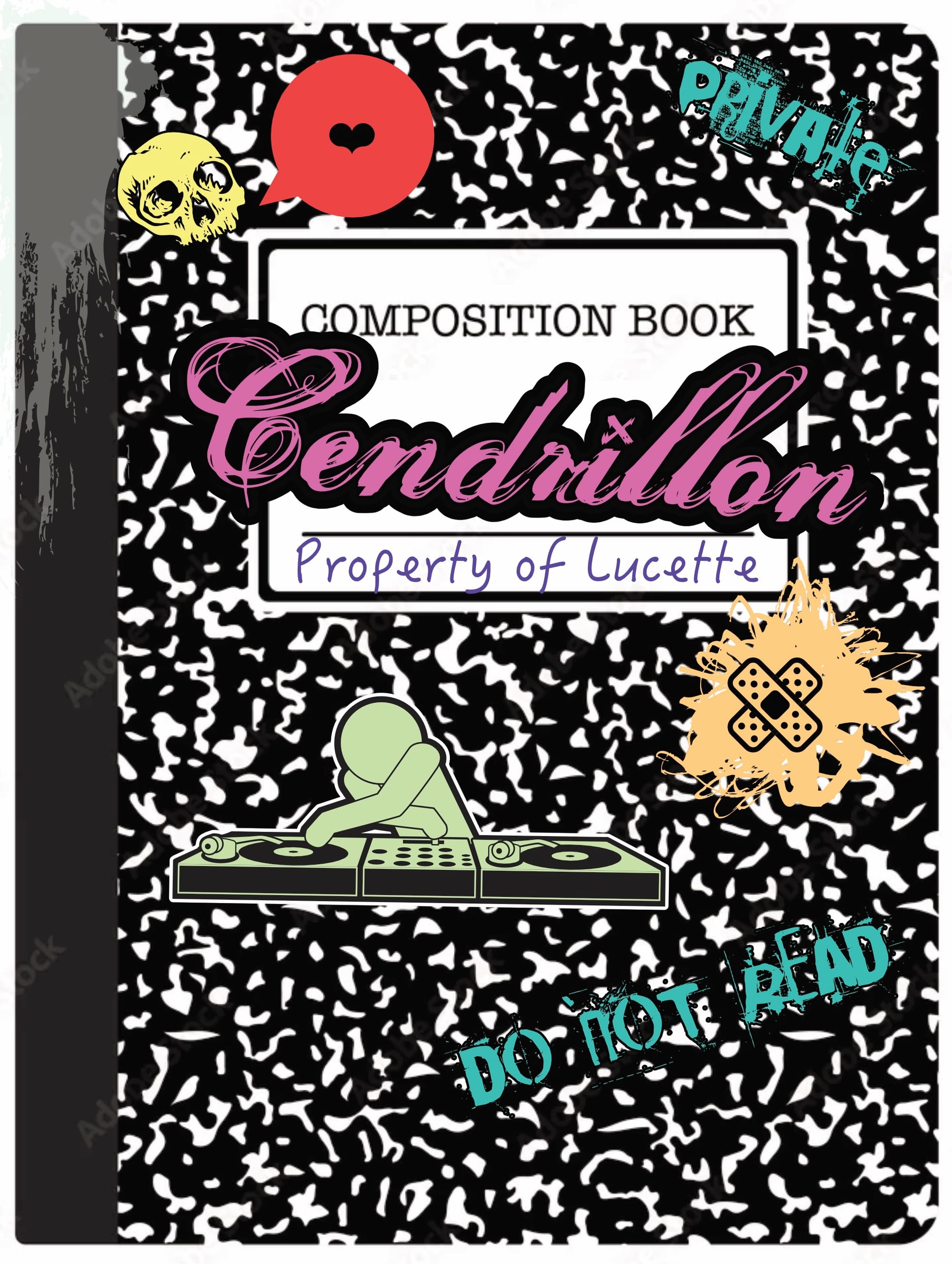
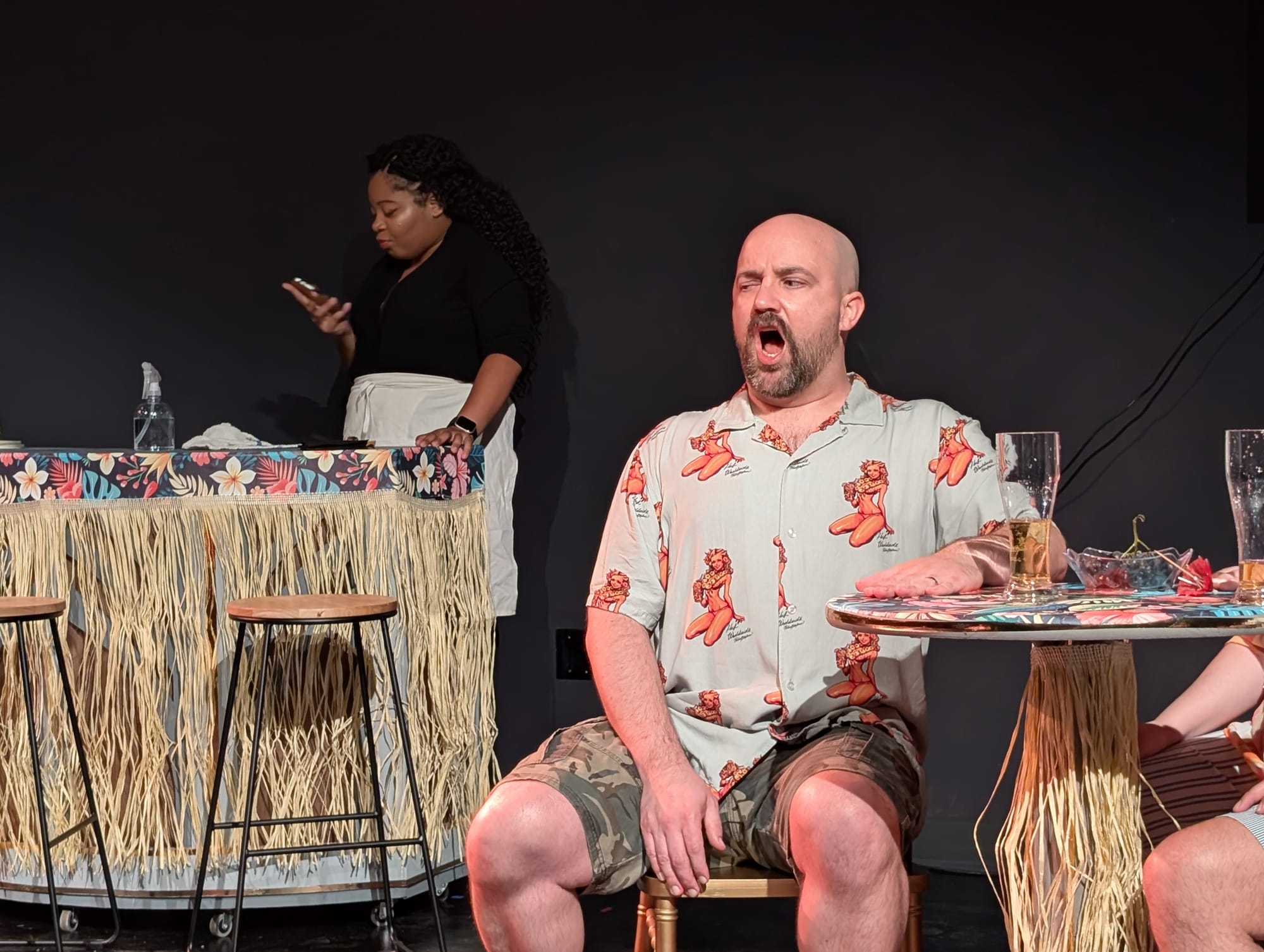
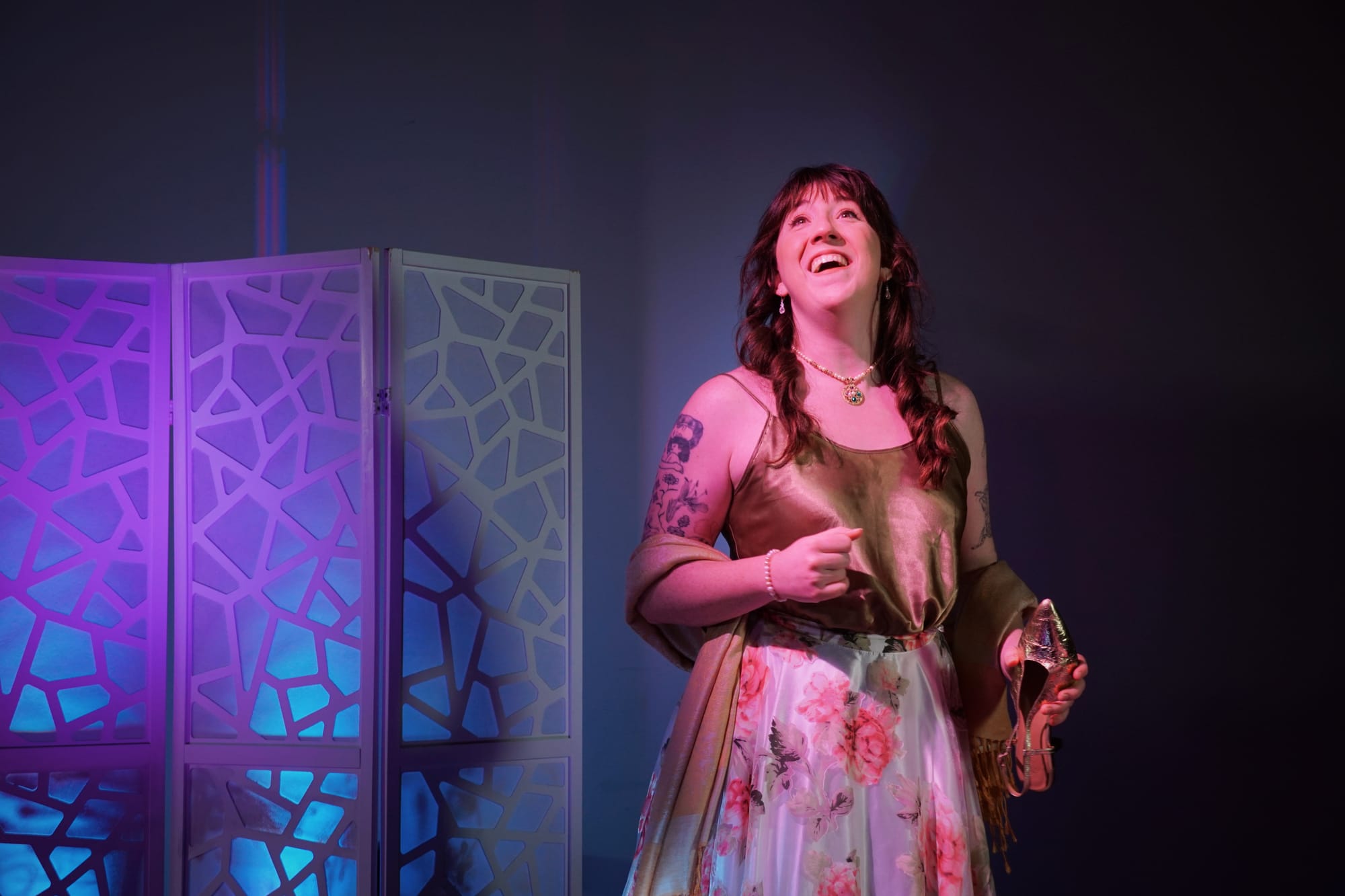
Through this, we end up with three versions of Lucette in the story - Lucette the older narrator, Lucette the idealized version of herself in her youth, and Lucette as the Fairy Godmother, the teenage author, as a perfect vision of herself in control and beautiful. Everything else snapped into place from there. Of course, she didn't remember the names of French royalty; she was a kid. She wrote her stepfamily a bit one-sidedly based on the parts of their personality that stressed her out the most. The Fairy Godmother (a magically empowered version of herself) is given the space to launch off some coloratura fireworks and rewrite reality to make her own dreams come true. And our author, limited in her knowledge of medieval and Renaissance France, cut some corners - a lot of cultural touchstones from her childhood in the nineties and 2000's make their way into the costumes, behavior, and world of this story.
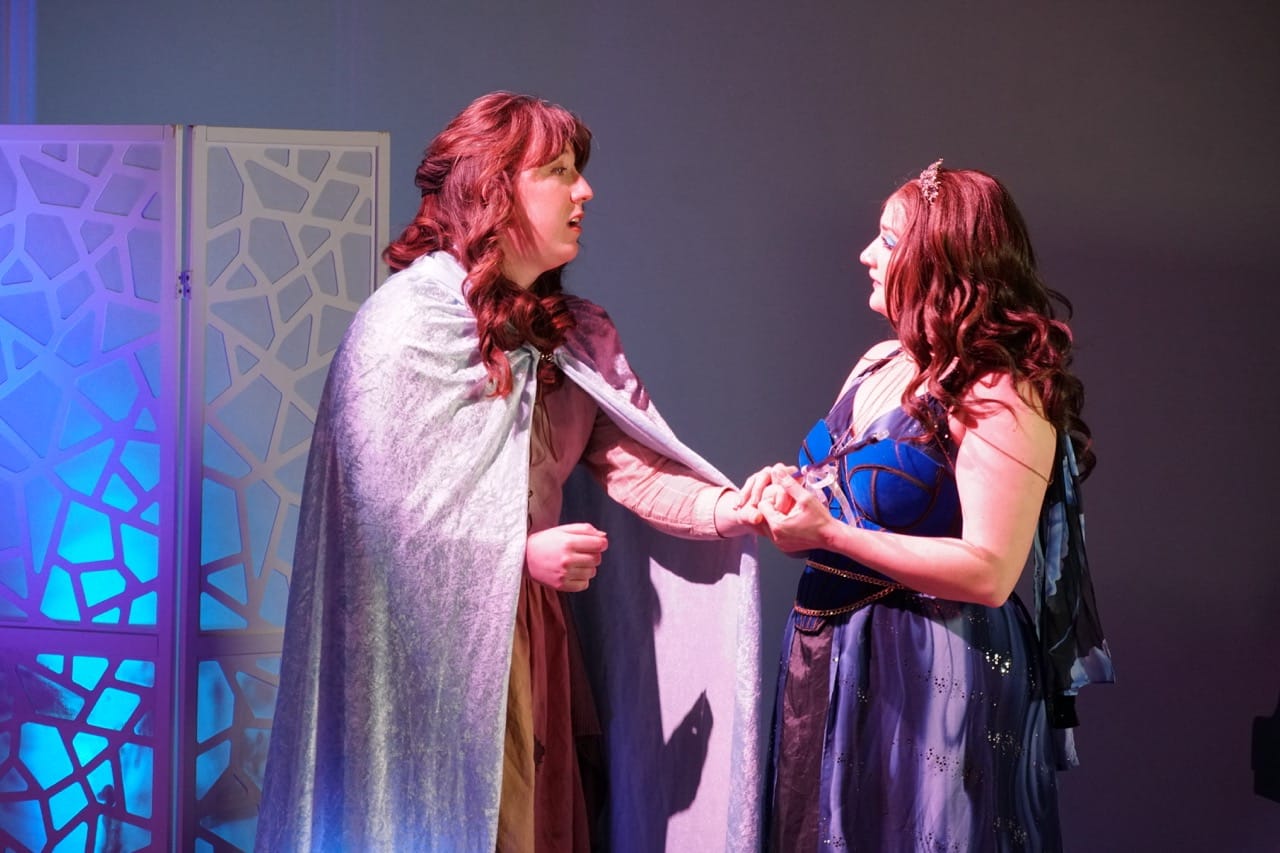
We found more and more nuance here - the idea that even though she couldn't put words to it, there were things that our author Lucette knew about her family. Things about how her parents interacted, how her sisters didn't actually hate her, they simply didn't make time for her, things about how her mother and father clearly did care for each other at some point, even if she didn't exactly understand it. There's nothing like a slightly unreliable narrator to pave the way for engaging storytelling.
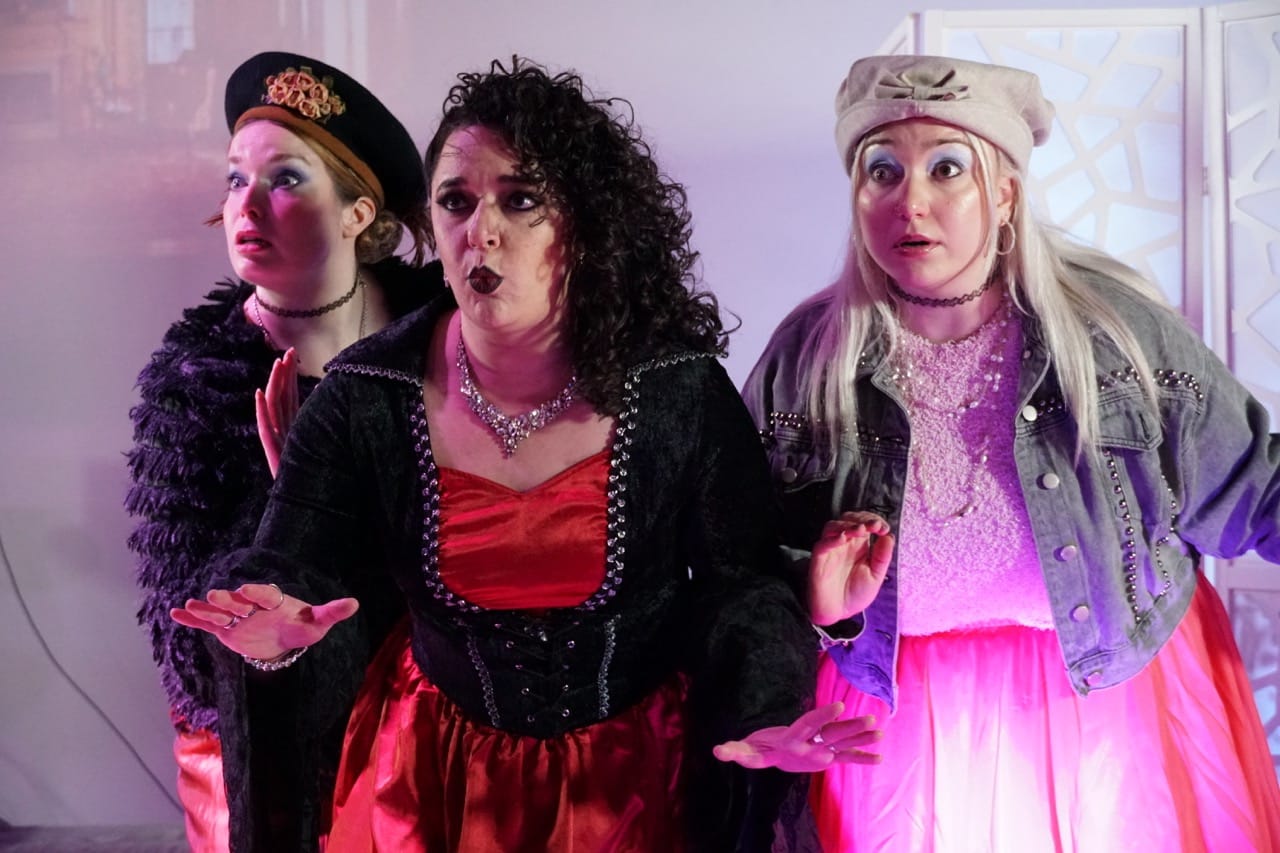
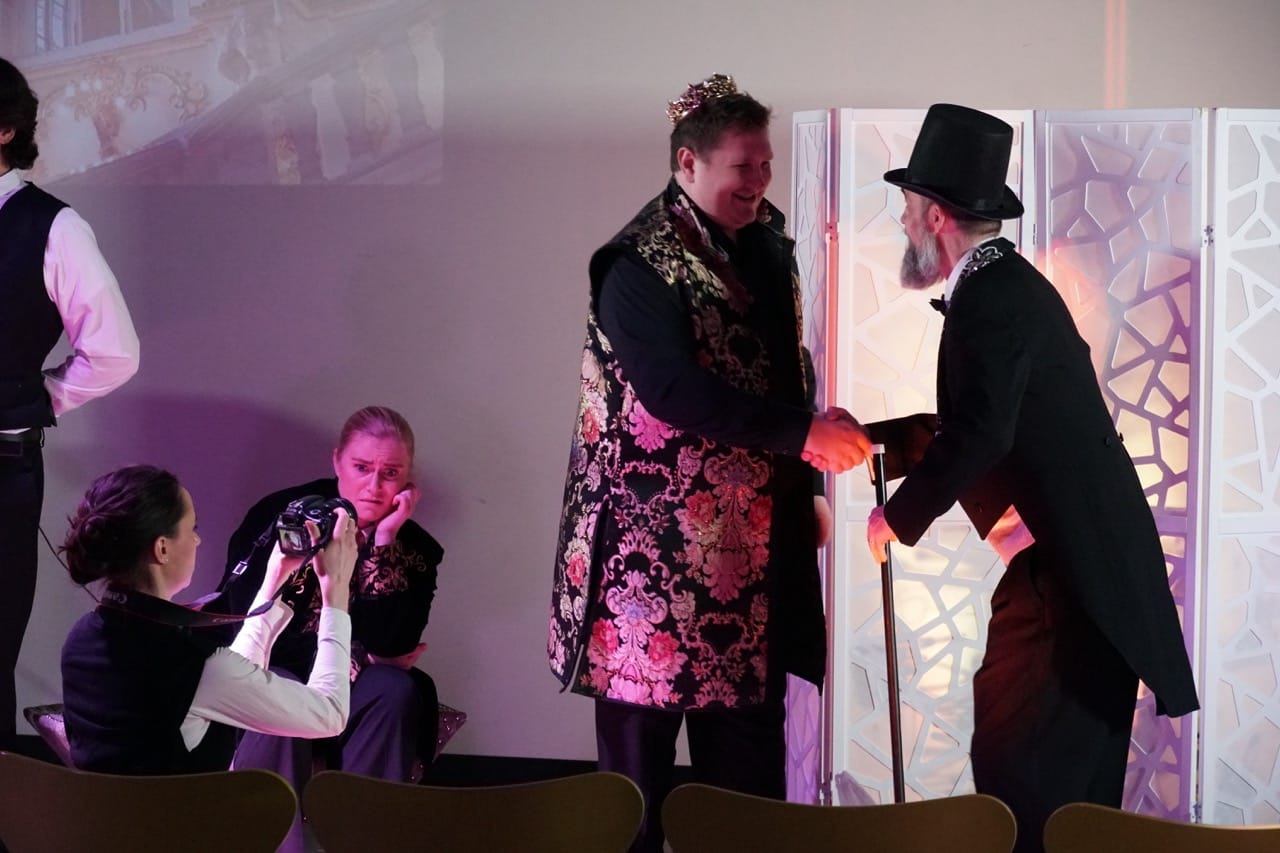
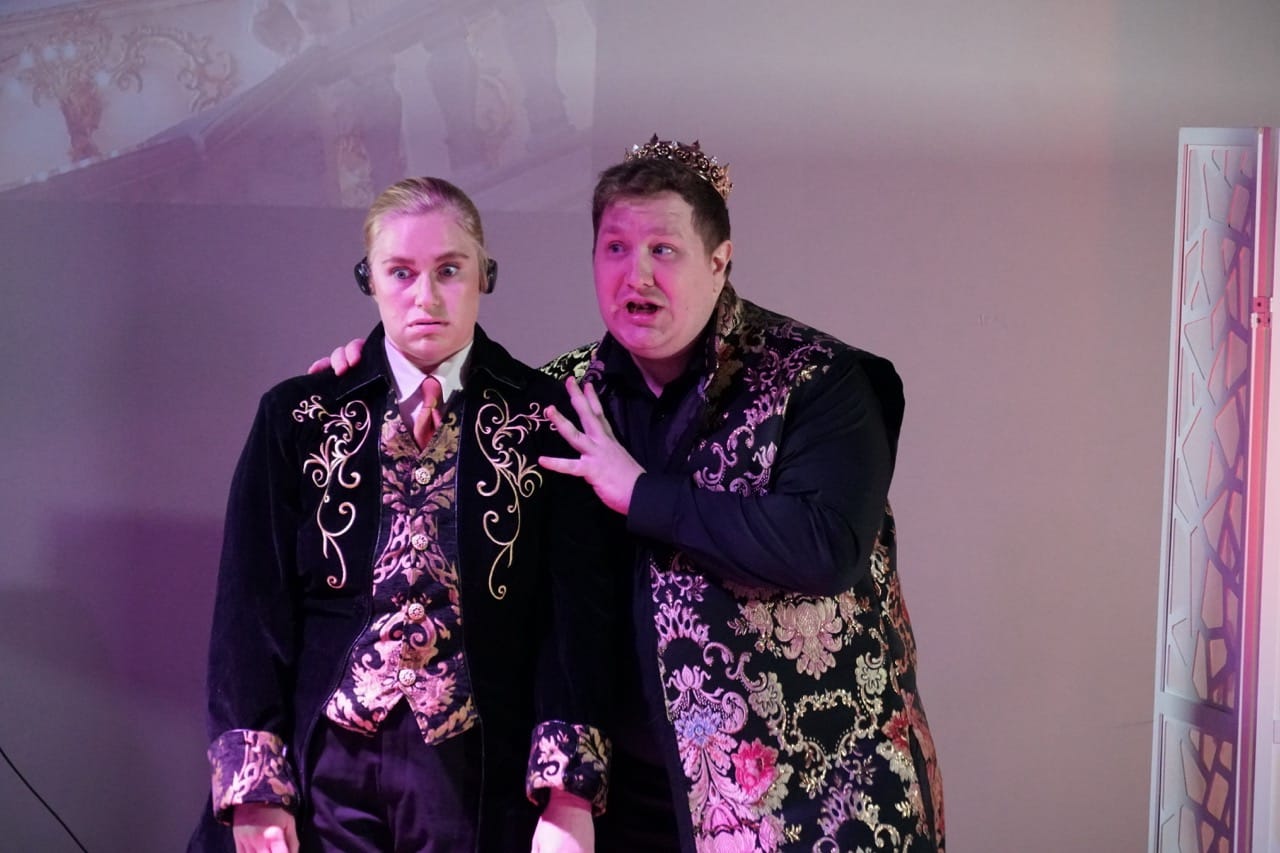
One element of characterization I felt deeply about was not presenting these characters as caricatures. When working with a fairy tale, many characters are painted in black and white - but pieces envisioned for older target audiences demand more nuance and care. I felt it was important that everyone onstage was set up to be someone's favorite, every performance. That meant that they had to be genuine, honest people. Lucette and the Prince share nervous laughter, both new to and overwhelmed by the idea of finding their person. Pandolfe and The Madame needed to have a solid relationship holding them together, or we wouldn't respect Pandolfe and his decision not to leave for the sake of his daughter. The stepsisters never actually antagonize Lucette in this text; they're just living in their own lane, motivated by finding their own identity in their family and the world. The King needed to not just be a monolithic figurehead, but a leader with charisma, responsibilities, and a deep love for his son. We needed to understand how the Prince and Lucette came to be how they are based on their families.
With these changes in mind, the text required some massaging to fit the vision. I'm a firm believer in the absolute importance of good supertitles for opera in foreign languages. You can breathe so much life into the music and text itself, and it can be a transcendent experience. If the audience has no idea what anyone is saying, it becomes a burdensome artistic experience. Art, after all, is communication. So, I undertook the adventure of adapting and redeveloping a poetic translation of the libretto that met our needs. This was a heavy lift for me, but a fulfilling one. I tried to flesh out Author Lucette and how she'd present these characters, making sure the words spoken by every person onstage read like their own voices, not a generic, literal translation. I found spaces where older Lucette could chime in with her own thoughts, so that the audience wouldn't forget that this is a personal story about self-empowerment and growing up. And given that this was a touring production, we embedded background images throughout the entire deck to give our audience a sense of place throughout the show. 518 slides later, we had ourselves a show.
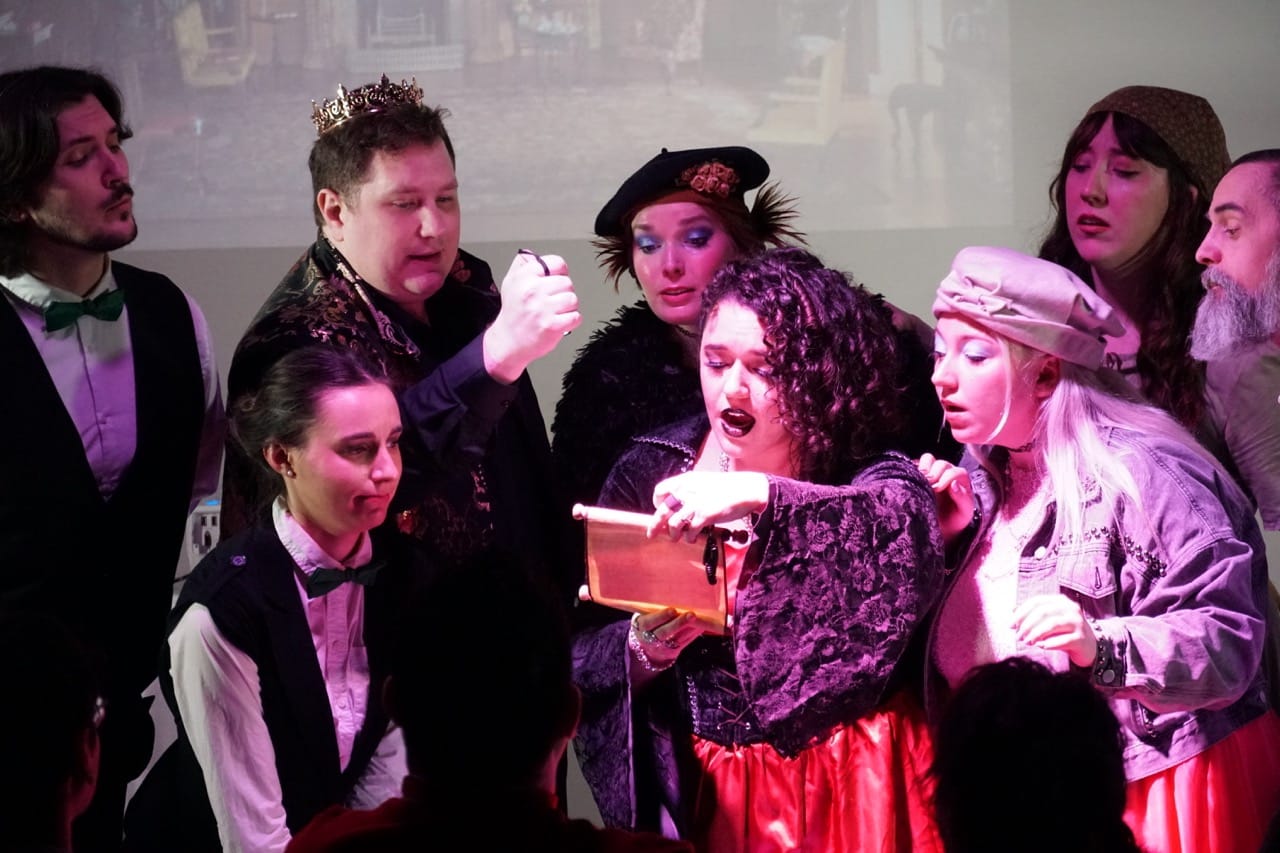
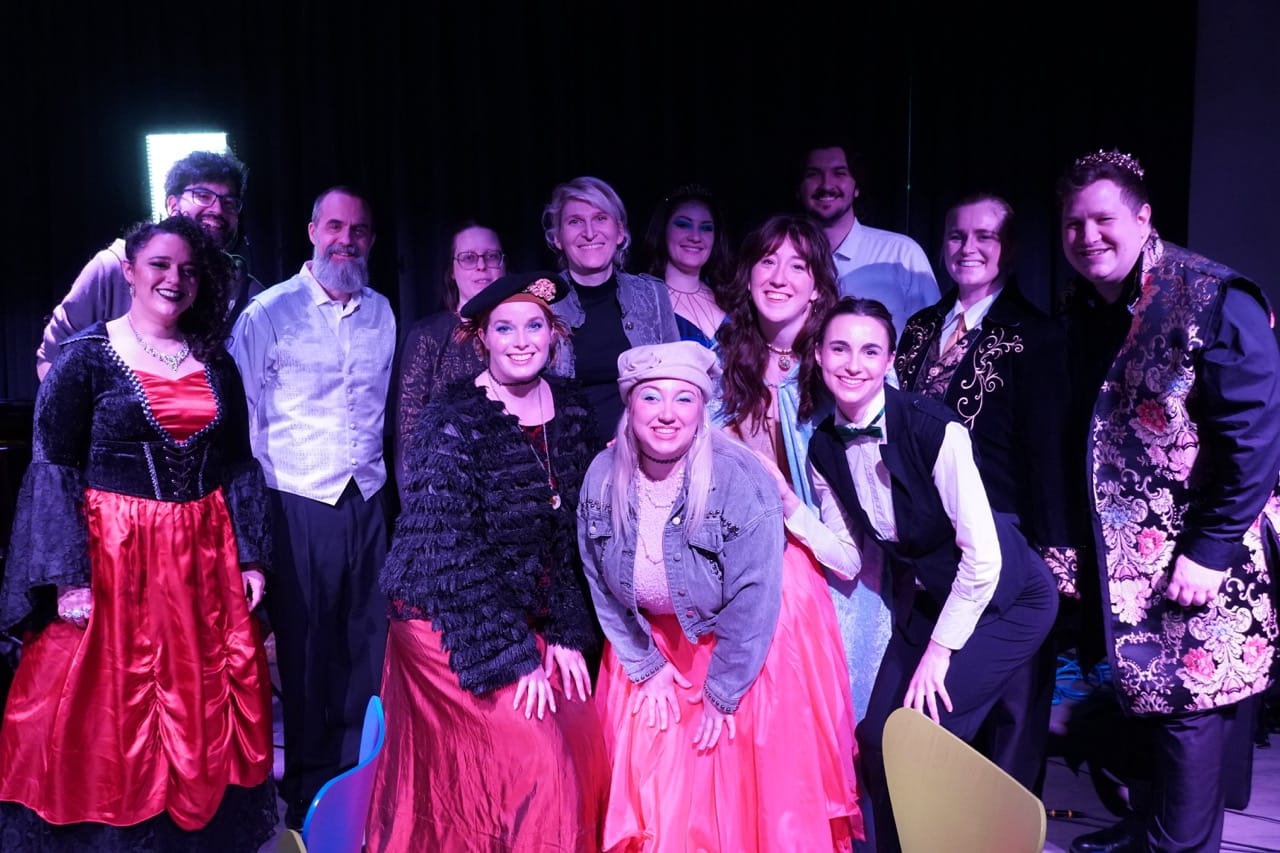
Chicago City Opera (previously Ouroborous Opera) has an interesting production ethos of making all singers equal collaborative artists within the project. As a director, that can be a little daunting, but it worked swimmingly here. In a workplace with this kind of rule, you're at risk of a few negative outcomes. Maybe a single person is too eager to shape the entire performance to their preconceived notions about the rest of the characters and the show's world. Maybe everyone gets invited to contribute, but no one says a word. While reviewing our staging as I prepared to archive my score, I smiled a lot, seeing all the little bits and improvements recommended or solved by the performers. I couldn't have asked for a better collection of performers - superlative singers and great actors as well. I'm deeply grateful to the entire team for having faith in this unusual vision and executing it brilliantly, everyone contributing to make the piece shine brighter than it ever could without them.